Shortly after Grace was born, doctors believed she was having an adverse side-effect to a medication her mother, Andrea, was prescribed during pregnancy. Andrea was left trying to make sense of what was happening, all while recovering from a difficult delivery herself. Even then, something did not feel right.
When Grace came home after nine days in the hospital, Andrea noticed constant crying, back arching, and discomfort that did not match normal newborn behavior. A mother’s intuition told her something more was going on. That instinct became undeniable a few months later.
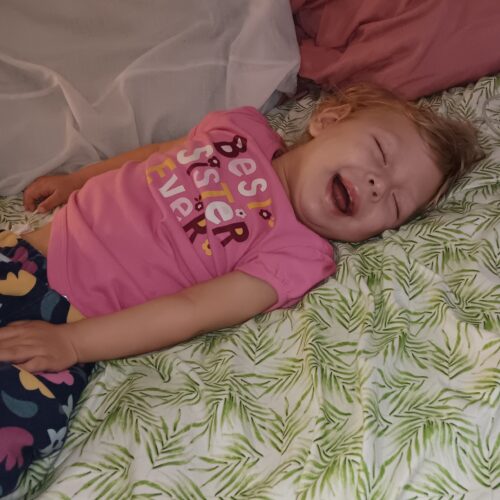
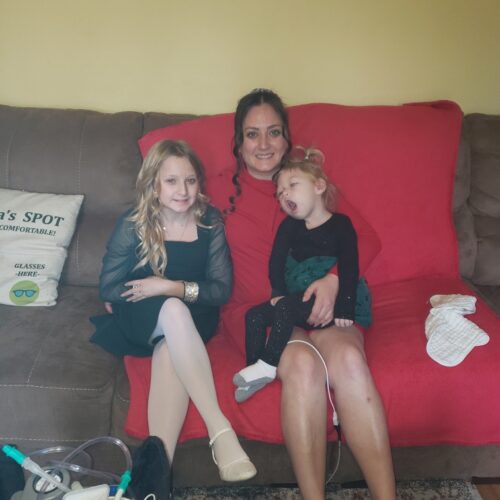
“One day, when she was three months old, she stopped breathing on me,” Andrea recalls. “So I call 911… we took her to the hospital, and they’re like, ‘that’s normal… babies hold their breath.’ I’m like, ‘I don’t think so… I have a 13 year old, and she never did that to me.’”
Grace continued having episodes, and doctors eventually recognized them as seizures. Imaging provided the first real clue. “They do an MRI and find out her basal ganglia is affected. And that is an indicator of Leigh’s.” Genetic testing followed, bringing answers that no parent is prepared to hear. “We found out she had gfM1 gene mutation… a type of Leigh’s [syndrome that] causes seizures and dystonia.” Grace was only six and a half months old at the time of her diagnosis.
As Andrea began researching the condition, the reality hit hard. “When I found out the prognosis is poor, it tore me up. I’ve struggled with addiction in the past, and I was sober. [But] nothing prepares you for this.” Much of that early period was spent alone in the hospital, trying to process overwhelming information while caring for her infant daughter. “I held it together for a little bit. When I first found out, I was by myself. My husband was out in the streets… and I was there in the hospital by myself trying to figure it all out. And I disassociated. I didn’t eat for three days, and I didn’t even know that I didn’t eat.” Grief and fear took their toll on Andrea. “I ended up going off the deep end.”
Like many parents receiving a rare disease diagnosis, Andrea questioned whether she had somehow caused her child’s illness. “I did ask, ‘is this something that I did?’ And they’re like, ‘No,’ so they did make me feel better… telling me that, ‘No, this isn’t my fault.’”
Life changed completely. Andrea left work to care for Grace full time. “I can’t work. I get those feelings of self-worthlessness, because I’m not able to provide for myself, but I’m present. I’m a mom who I’m here every day. I thank God for that, at least.”
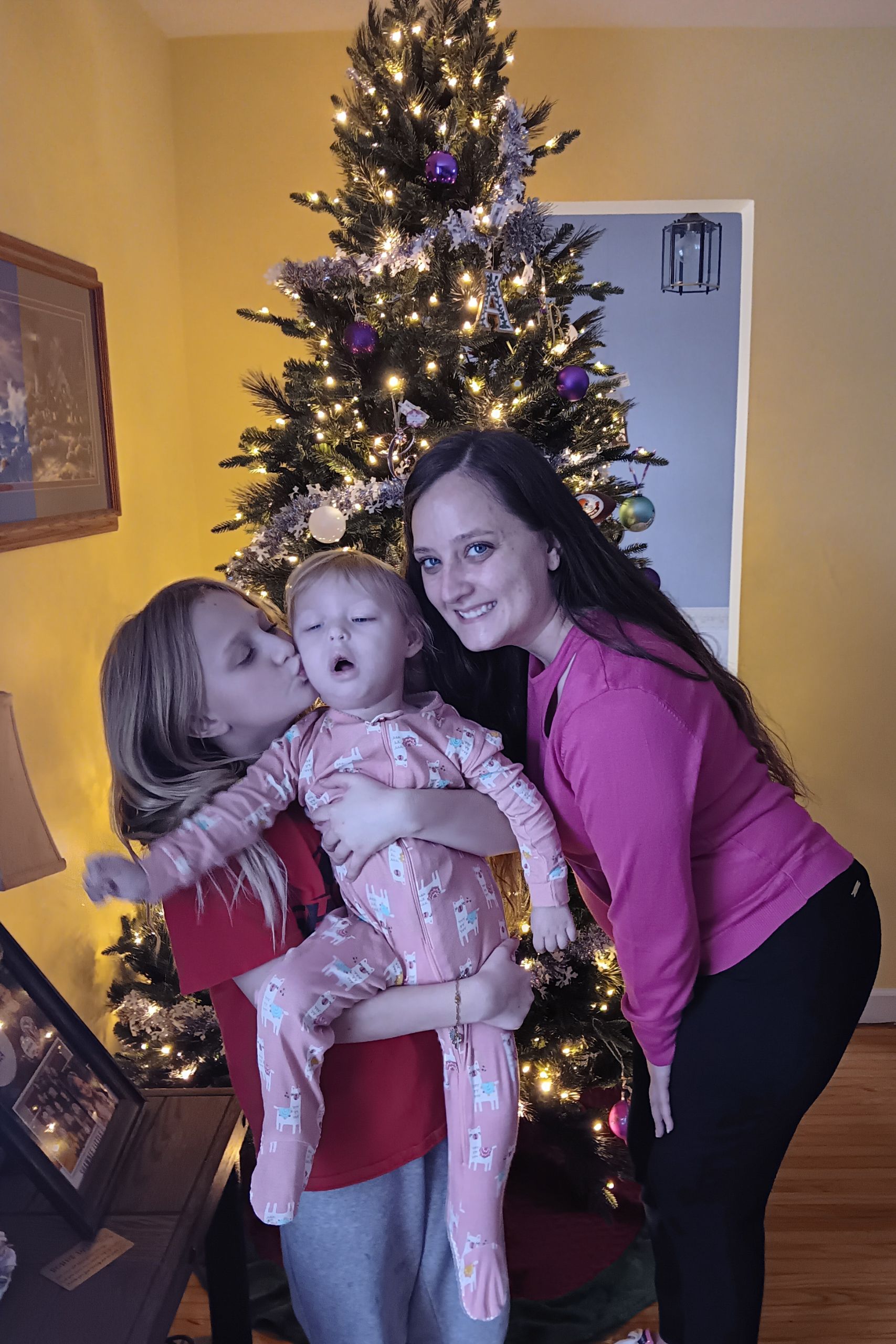
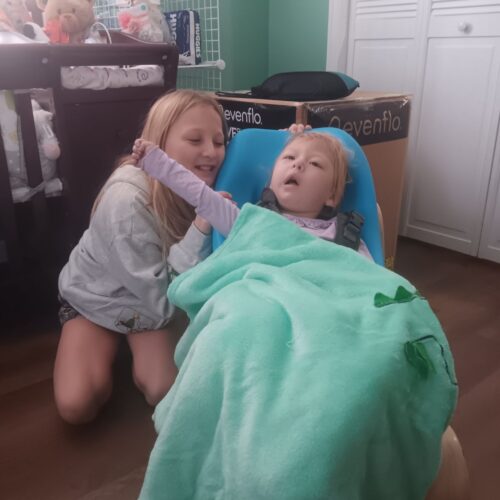
Today, she leans on the support of her parents while navigating caregiving and personal healing at the same time. “I have my mom and my dad. My husband is still [struggling with addiction]. I left him six months ago. So on top of all this, I’m going through that heartbreak.”
Despite the pain, she still holds hope for his future. “He hit a spot where he’s given the opportunity to pivot his life and make a difference. And so I’m just sitting back seeing where he goes from here.”
Through everything, Grace remains the center of her mother’s strength and purpose. “She gives me strength, and I do things for myself, like meetings and such, sharing what is going on in my life today gives me strength. Her and [my older daughter] Riley.”
Grace’s world is filled with connection and closeness. She finds joy in familiar voices and gentle interaction. “She loves mom. She loves women. You know, she likes men too, but she loves her girls. She loves her sissy. Sissy brings her joy. She’s got a 13 year old sister. And… she just loves her. You can tell.” She especially loves being close to the people she trusts most. She loves to be snuggled and held, and Andrea laughs, “when I try to put her down, she’ll hold her breath until the machine goes off and I come running.”
Milestones look different for Grace, but they carry a deeper meaning. “Maybe three weeks ago, she rolled over. I positioned her, but she rolled over from her belly to her back. They told us she was just gonna digress, that she wasn’t gonna progress, and that’s a progression, that’s a milestone.” Moments like these become celebrations, reminders that progress can still happen even when expectations are uncertain.
Andrea describes Grace as a child who changed her life in ways she never imagined. “She’s a blessing. The newborn stage is my favorite, because you can just love them and hold them and they don’t run away from you, and then that’s what I got. So she’s perfect for me.”
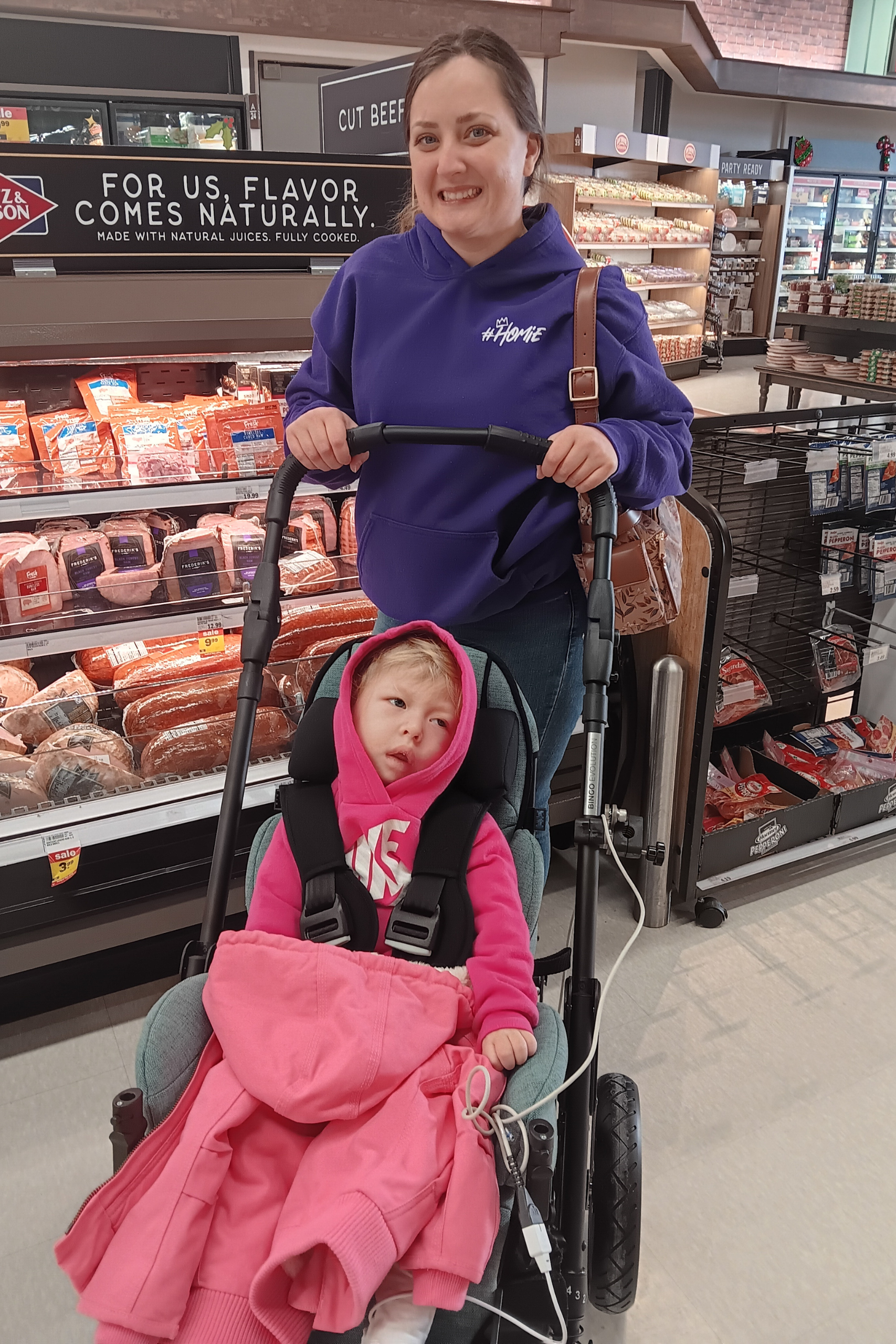
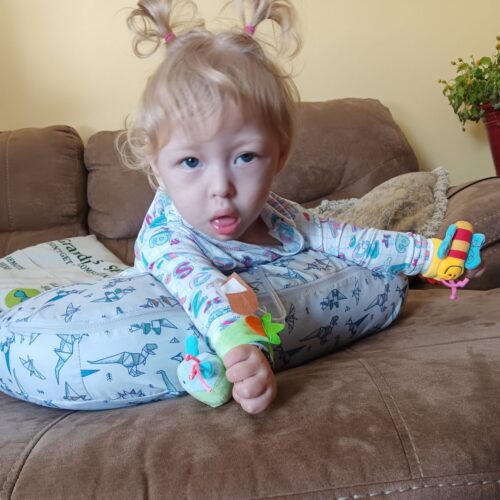
Her name, which Andrea chose long before she knew she would be on this journey, now carries deeper meaning. “She’s literally my saving grace, my amazing grace.” Grace has reshaped how Andrea sees herself and the world. “She’s taught me resilience. She’s taught me gratitude. She’s taught me how to be a good mom. Things are different with her, and I thank God for that.”
Today, Andrea hopes Grace’s story reaches other families walking similar paths. “I want to give hope to other parents who are going through the same thing. Just take one day at a time. Don’t let the diagnosis define your family, and still live life to the fullest. Make now important. Don’t be afraid. Take them out and just enjoy life with them with the little bit of time you have.”
Above all, Andrea wants people to understand that Grace’s life is meaningful right now. “Just because she has a terminal illness doesn’t mean that life is over. It’s just begun.”